Mix it up!
- happilyamy
- May 19, 2022
- 2 min read
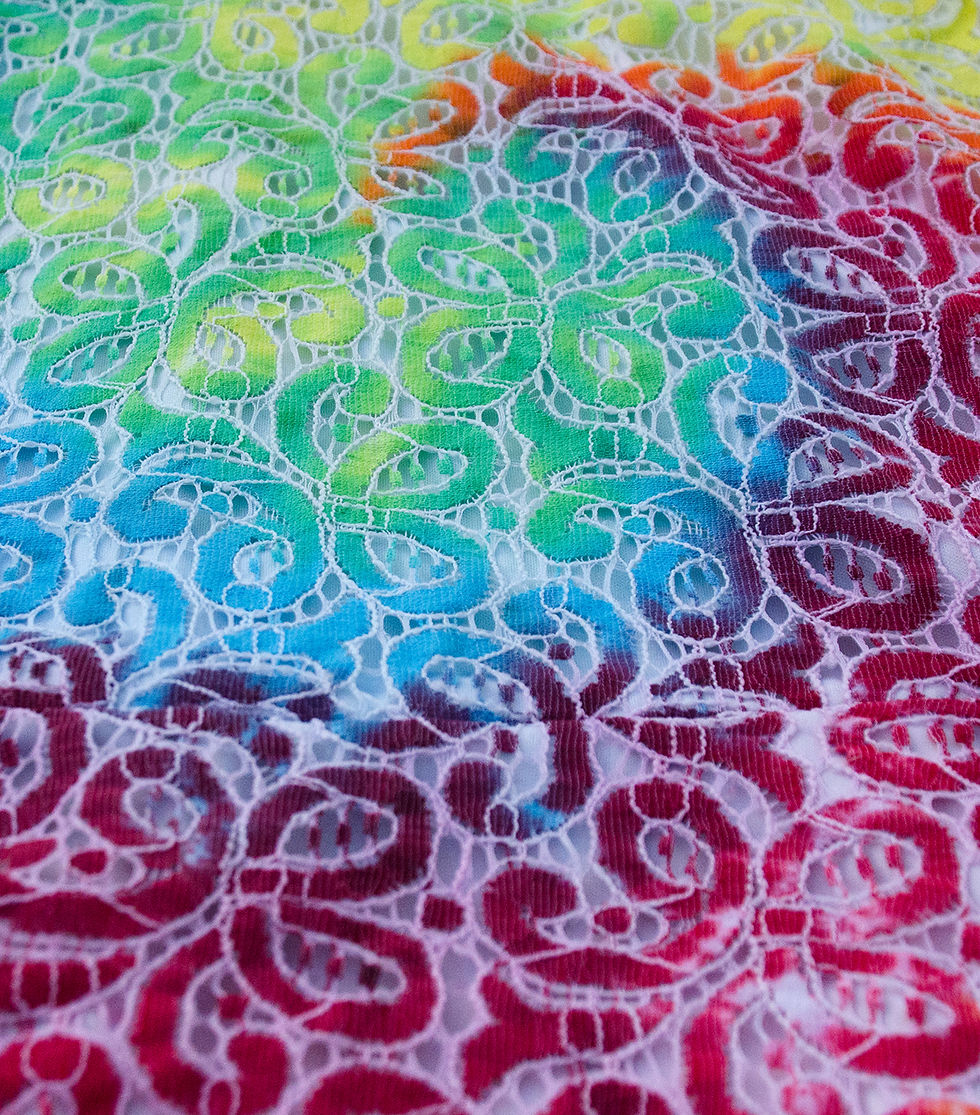
The general rule of thumb when using mx fiber-reactive dyes is to dye items that are primarily or 100% natural cellulose (plant-based) fiber such as cotton, rayon, hemp, bamboo etc. Dyeing an item you *think* is natural only to have all the dye wash out in the end is a disappointment I do not wish on any dyer! It has only happened to me once. I remember beginning the rinsing process on an item and noticing that the colors were changing drastically, fading exponentially, until they were nearly completely gone! Ughh... polyester. Whyyyy?! There are a lot of cotton/poly blend items out there too and while you can dye them, you must keep in mind that only the cotton portion of the garment is going to maintain the vibrancy of the dye. The poly portion will fade drastically and/or wash completely out. So why would a dyer ever mess with a poly blend fabric? The picture above is a great example. Look how beautiful the contrast of the natural fiber is next to the undyeable portion of the item! It is stunning! Another reason a dyer would use a poly blend fabric is if they are looking for lighter color shades. As long as the item has around 50% cotton, some of the fibers will take the dye. This *could* yield a beautiful pastel result. Then you have items that are maybe polyester on the inside and 100% cotton face. Those items dye beautifully on the outside, the colors stay vibrant, and the faded portion hides itself within the inside of the garment (some hoodies are a great example of this.)
Polyester (and other synthetic fiber) can be a pain, or it can be a pleasure! It really depends on the way a garment is made. Mixing up fabric content can be risky but it can also be very rewarding!

Comments